New: How composers can use silence to increase electrical activity in the brain
Grandma demanded that I quit playing the piano
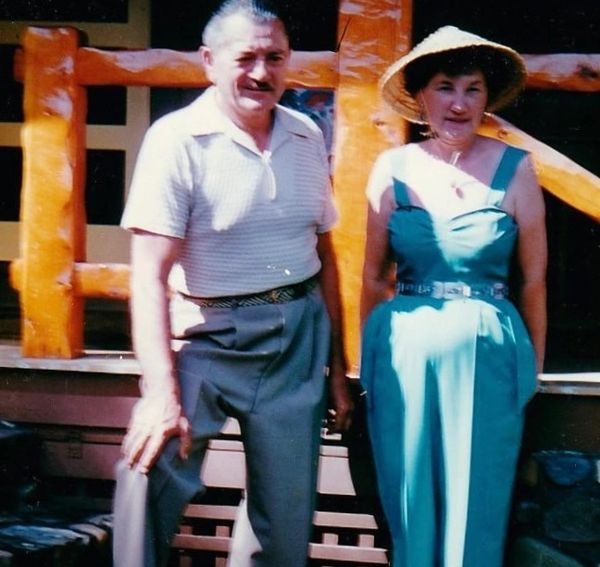
We would frequently have Sunday dinner at my grandparents house in Hollywood, Florida. Since I was playing Beethoven's Piano Concerto #1, I brought the music book with me to show my grandfather, who was always supportive of me. Alexander Kastle was a brilliant guy and talented artist who ran a successful art studio in Manhattan for several decades.
As my grandmother was serving dinner, she became angry with me and demanded that I stop playing the piano. She said, "After all, I'm the best pianist in the family and you have a lot of nerve walking into my house with a piece that's 100 pages long. You have to quit." My mother got up and said, "You don't tell my son he can't play the piano." She announced that we were leaving and not having dinner there.
I walked to the car with my grandfather. He said, "My wife Evelyn only knows how the play one 2 page piece of music. Even though she's been playing the same piece for 50 years, she still can't remember the notes." He said, "I didn't think it was possible for anyone to be that stupid." My mom railed against her mother-in-law all the way home. My dad said nothing.

Sabotaging my lessons with Ivan Davis
When I became Ivan Davis's youngest student at 15, He gave me a practice regime that he said would require 3 and a half hours a day at the piano. My parents only allowed me 2 and a half hours a day. They said they have to see the local news at 6 and the national news at 6:30. They ran the TV with nobody watching. My dad was reading the newspaper and my mom was in the kitchen. I went to the high school principal and told him I was studying at the U of M and needed to be moved to the early shift. He changed it immediately. So instead of getting out of school at 3:30, I was finished at noon and had plenty of time to practice.
Their first plan failed, so they came up with another one. My mom announced that she had to meet Ivan Davis. My parents were waiting in the entry lobby of the music building when Davis arrived. I told him that my mom wanted to meet him. Ivan was very gracious saying, "It's nice to meet you." My mom got right in his face and screamed at him with anger and vitriol, "Are you going to make my son a concert pianist?" Ivan made a gesture to me like what is this? We walked down the hall to his studio. He told me that I have to keep that crazy woman away from him. He said if she gets within 100 feet of him he will drop me as a student.
My mom's conversation with the President of CBS
Right after my network television debut on CBS aired, my parents called me. My dad was nice at first, but his mood changed when he asked how much money I made. I told him that as publisher, composer and performer, I was making thousands of dollars a minute. He became angry and said that I was lucky to get on the show and that would probably never happen again. I told him that the producer said that the show was scheduled for a re-run in a couple of months. I would get paid again as a publisher and composer. He started yelling, "never again, never, never."
My mom took the phone away from him and asked me about how they do the re-runs. I told her that they just play the master. My mom said, "Ah, the master." and ended the call.
The next morning, my mom called and said that she just spoke with the President of CBS. He said he saw the segment and congratulated her on having such a talented son. My mom told him that she wanted him to send her the master because her son is on it and she wanted to make sure that it was "safe." The CBS President said that he would gladly send it to her as a gift. My mom asked, "Don't you have any use for it?" He said, "Believe me, I dont have any use for masters of The Pat Sajak Show." She succeeded in stopping me from having a re-run which would have generated career momentum and thousands of dollars in ASCAP royalties.

What my parents did on the day Streetwise was released
The day Streetwise was released, I did a sold out show at Largo in LA that was filmed by Entertainment Tonight. My parents were doing something sinister in Miami that could possibly derail my recording career. The next day I found out what they did. Roger Holdredge, President of Virgin Classics, told me that he just got a call from the CEO of WEA, Virgin's distributor. He said "Who the fuck is Richard Kastle?" He told Roger that the biggest retail chain in south Florida just threatened a boycot of all WEA releases, unless my career was ended immediately.
Roger told me that my mom went into Spec's Music at Westland Mall in Hialeah and found my CD and showed it to the manager, saying, "This is my son. I want him at the front of the store." She proceeded to tear up the displays at the front of the store, essentially commiting vandalism in my name. She caused major damage to the Madona display.
Roger said he was going to save my recording career by running a big advertising campaign featuring me and Spec's music. The Spec's executives were very happy to get free advertizing, so they dropped the boycot threat. He told me to keep my mom away from the record stores.
When I toured with Jay Leno, I did a couple minutes of stand-up comedy at each show. I encorporated this scene at the record store into my comedy routine. The punch line always got a big laugh.

Jay Leno and my mom
A week before my Tonight Show appearance, my mom announced that she was going to the taping of the Tonight Show and I couldn't stop her. I did not want her in the studio while the show was being taped, so I made her another offer. She could come see me at Caesar's Palace in Las Vegas at the end of August. I told her that she could come backstage and take a picture with Jay Leno.
Caesar's Palace gave my parents the VIP treatment. I had to sign for $600 worth of champaign and hor's d'oeuvres for my dressing room. Jay came over after the show and couldn't have been nicer. My mom followed Jay around backstage taking picture after picture of him and her relatives. Finally, Jay said, "Mrs. Kastle, I took more pictures for you than I did for the cover of Time Magazine. I'm tired, I'm going to bed." My mom said, "We don't have a picture with Aunt Sophie". As Jay walked away, my mom started screaming at the top of her lungs, "Where's Aunt Sophie? Oh my God! Where's Aunt Sophie?"
The stage manager motioned to me to get her out of the backstage area. I tried to escort her out and she pushed me away saying, "I'm the mother!" She continued screaming, "Where's Aunt Sophie?"
When I arrived at my dressing room the next day, a smiling Jay Leno popped his head in the door saying, "Where's Aunt Sophie?" Later on, I could hear my mom's voice coming out of Jay's dressing room. As I approached, Jay said, "Okay, mom. What could I get for you, mom."
My mom proudly proclaimed "I'm Jay Leno's guest." Jay said something to the effect, "We have to take care of out stage moms, Kastle." I believe Jay Leno viewed my mom as a tragic figure, like Mama Rose from Gypsy. She needed to be coddled. Jay and Mavis even sent her Christmas cards.

Collateral damage to my career from my mom's behavior backstage
I continued touring with Leno over the winter. Since he was becoming the host of the Tonight Show in May, his last group of performances was in April. He offered them to me. It was Phoenix, Albuquerque, another city I can't remember and a weekend in Las Vegas doing five shows at Caesar's Palace.
My manager Ruth Anne Propper called me and needed me to come to her house for an important meeting. Her house was high on the hill in Pacific Palisades. We sat out by the pool with a glorious view of the ocean. Ruth Anne said "Caesar's said no." They said that my mom disrupted the backstage area and that's why they won't book me. I said, "It looks like my mom cost me 6 or 7 thousand dollars worth of bookings." She indicated that it's much worse than that. She was using my 4 comps per show to invite representatives of other headliners playing Las Vegas over the summer. They were all saying that they have to see my act before they can book me. She was confident that I would get several weekend bookings opening for other headliners. It was possible that one of them could take me on a national tour like Leno did. She said, "Now, all that is gone. Once everyone finds out that your family disrupts the backstage area, noone will book you as an opening act."
There was some good news. I was booked in May to play the Met Life Convention in Palm Desert. The William Morris Agency negociated a $4,500 fee for one 25 minute set. I would also get a $500 cash meal per diem. That was the last time I recieved a booking from Ruth Anne Propper or the William Morris Agency. Cheers to the late, great, Ruth Anne Propper.

Did my parents wrecking displays in the record store have anything to do my recording career being frozen by EMI ?
No, they had nothing to do with it.
When Virgin Classics President, Roger Holdredge, signed me, he told me that Europeans who run the international label do not want my album to be released in Europe. They viewed classical music as "their turf." They didn't want a flashy American in a leather jacket selling a lot of records to the younger generation in while offending the older generation. I was allowed to have an American release because it was the culture Richard Brandson's company to let the Americans record whomever they want for the American releases. Roger did get them to give me a limited release in the Netherlands, Belgium and Luxembourg, the three most liberal countries in Europe.
Simon Foster, who ran the international classical label, flew me to London first class on Virgin Airlines and threw a birthday party for me. He decided to make my Titanic Symphony my third album and my first release in all of Europe. Since the ship was the star of the album, all the images in the packaging would be of the ship, not me. I was fine with that.
When the sale of Virgin to EMI went through, it was clear that this Eurpoean based label didn't want the Royce Concerto album to be released at all. They fired all the Virgin Classics employees and released all the classical recording artists, except me. They effectively froze my recording career. Steve Murphy, President of Angel Records, was in charge and he wouldn't return my calls.
I contacted Phil Quatererro, the new President of Virgin American, the rock label. I asked if we could do my second album the same way we did my first one where the rock label does the artwork, packaging and the release. Phil said, "I saw you on TV. You sold a lot of records. I would be stupid to not release this album, unless there's some reason I can't." He said he would call EMI headquarters the next morning and find out what's going on. When he called me, he sounded frustrated and said, "I can't release this album, and I can't tell you why. I'm very sorry."
Two years after Streetwise was released, I was losing my presence in the record stores. I flew to and told Steve Murphy's assistant that he was going to meet with me. He invited me up to his office for lunch, and then said, "Royce Concerto? I don't get it. Titanic Symphony? Who cares about a boat that sunk 80 years ago? What were they thinking?" He was being disingenuous. He knew that the Titanic Symphony would be a big success. He also knew that my first release was far more successful than any other classical piano release and that I sold enough records to make it on to the rock charts. (I posted the charts on the Streetwise page of this website.)
Six months later, the former Virgin Classics President told me that my contract was in yearly cycles. Even if they didn't record the Titanic Symphony, they still had to pay me 2 five-figure checks. Roger Holdredge advised me to send EMI headquarters two separate bills. In the business, they call this, "Shit, or get off the pot." Roger said they will continue to stall the process, but eventually they would offer me ownership of the recordings and some money. Roger advised me to take the offer and then make a deal with an independent label for the release of the Royce Concerto.
The European labels are currently promoting substandard composers who who lack the intellectual development that is necessary for creating a symphony like Beethoven or Shubert. They flood the market with European stooges who can't process enough variables to be a classical composer, while stopping the career of an American who can process more variables than most of the composers throughout history. This is how the European labels create a false narrative that they are still the best in classicl music.
Release of Royce Concerto
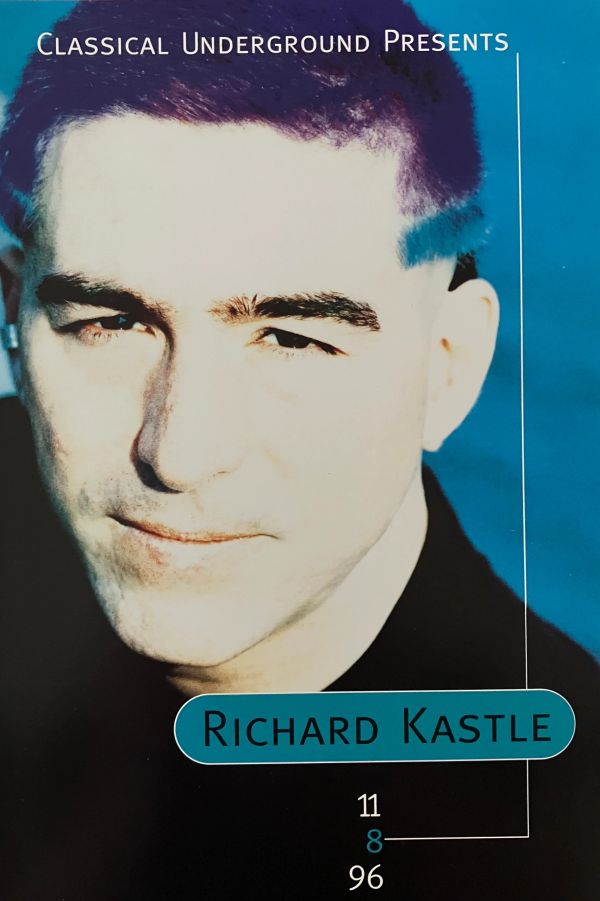
Roger Holdredge, former Virgin Classics President and Executive Producer of the Royce Concerto album, attended my 1996 piano recital at Lincoln Center. He brought with him the guy who runs Yum Records and Beloved Entertainment Group. After the show, he told me that Yum Records was interested in releasing the album.
EMI gave me the master of the Royce Concerto recording as part of my release settlement. It was damaged and had pops and scratches all over it. Luckily, Roger had a safety master in his closet at home.
My manager, Mike Caffey and I were going to Disney World and staying at the Contemporary Hotel which was not far from the headquarters of this independent label. We had a business meeting with the Yum Records executive at the California Grill and an agreement was reached. Since 10 of the 11 cuts on the album were my compositions and I own the publishing on them, I could make a good profit as a publisher. I offered them the rights to the recording for $1 providing that they did an endcapping campaign to promote the album in the record stores. Labels used to pay to have their product at the end of the aisle or in a prominent display space. He agreed. He wanted to use the photograph from the Lincoln Center concert as the album cover shot and I was fine with that.
Since he needed to get started on the album cover and packaging, he sent me a preliminary agreement. It stipulated that the artists clauses would be in the formal agreement which I would receive soon after. The formal publishing agreement would be sent with it. I sent him the master and the photography. It was released and in the record stores a few months later.
I told him that the album cover was confusing and it needed to have the word "piano" and "classical" on it. I recommended that that he attach a sticker that says, "Includes a new classical piano concerto" or "Includes Chopin's Polonaise in A Flat." This was not done.
When it was released, I had friends calling me and telling me that they couldn't find my CD at the record stores. I had trouble finding it in NYC. It was not in the classical section and there wasn't any endcapping promotion. I found it under adult contemporary, new age and jazz. One of the store managers looked at it and said, "this is a product that doesn't know what it is."
One of my friends, Richard Silverman, who graduated from the Brandeis Law School, called his lawer friend at the Federal Trade Commission. I recieved a call from the FTC lawyer. He said that it was common for independent labels to promise a formal agreement, and then not deliver it. He said, "Even though they have a preliminary agreement with you the artist, they don't have a formal agreement with you the publisher, and therefore, they can't legally release the album." He advised me to call the distributor and tell him to remove the product from retail. The distributor said it would take a couple of months, but he would do it.
Roger Holdredge called me and yelled, "you guys need to power down!" He said that pulling an album from retail, just because you don't have an endcapping campaign was not reasonable. I told him that it wasn't about that. It was because the flawed packaging that didn't include the words, "piano" or "classical." He agreed that the product will not sell unless retail knows that it is a classical piano album.
I ran into Roger's executive assistant in NYC. She lived a block away from me on 14th Street. She told me that Yum Records didn't have enough money to do an endcapping campaign and explained how expensive it was. She said that many of the artists on independent labels sell next to nothing and that the labels are doing them a great favor by helping them to have an album at the record store.
My manager said that he saw people selling the Royce Concerto CD on the boardwalk in Venice Beach. As long as people are enjoying my music, I don't care where they got it from.
Independent labels like Yum Records play an important role in the record business. For many artists, having their album released by an small label is their biggest accomplishment.